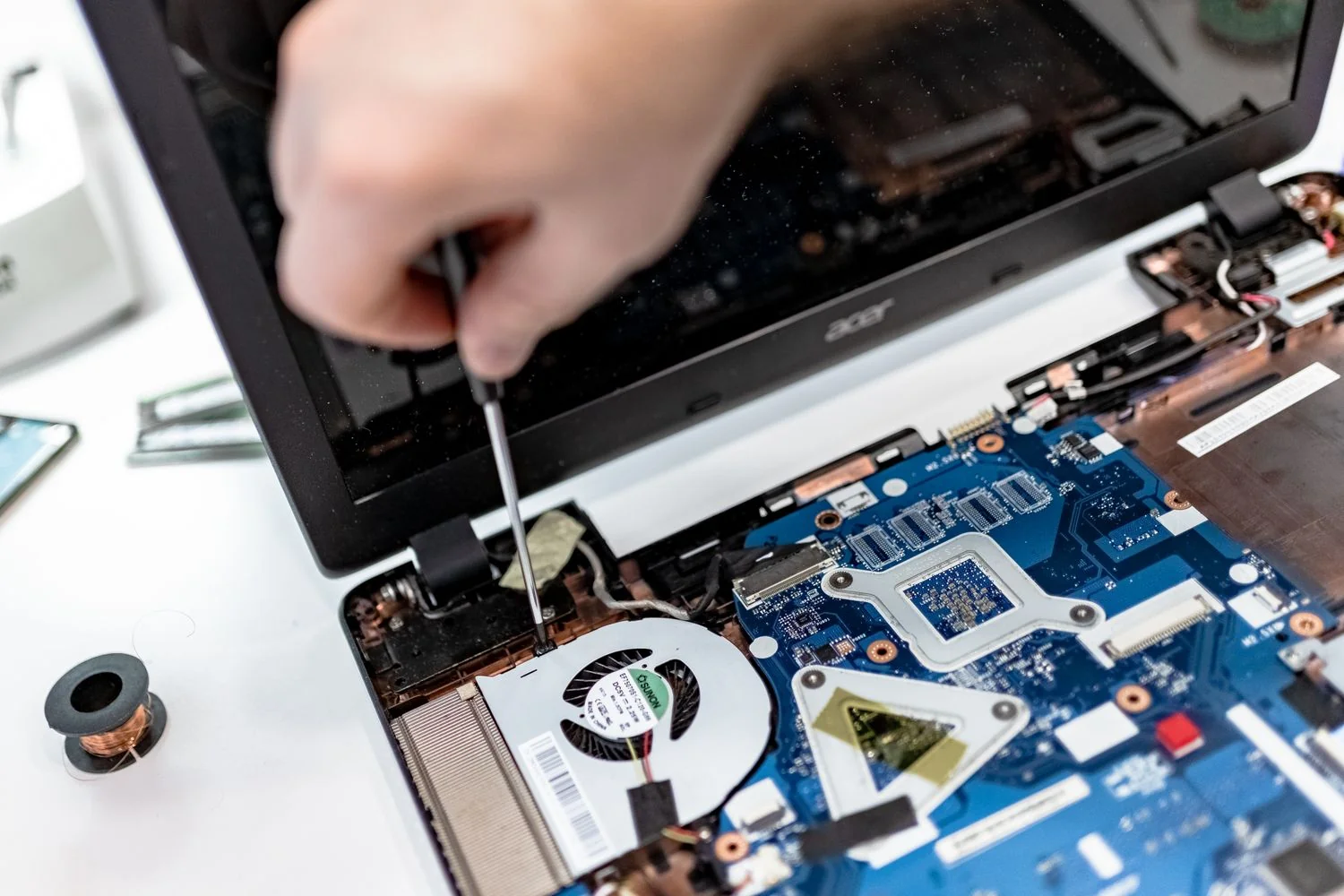
When a study laptop fails, time pressure can lead to an expensive immediate replacement. First separate three questions: what has failed, which work must continue now and what solution fits the rest of the course? A repair decision should address all three.
Diagnose before comparing replacements
Record the symptoms and back up accessible important files where this can be done without creating further risk. Check purchase records and existing service commitments before commissioning paid work. Legal and technical treatment depends on the case; a brief description is not enough for a remote diagnosis.
Ask an appropriate repairer about diagnostic charges, likely work and timing. Establish whether the estimate is binding and what approval will be sought for additional work. A low initial quoted amount is not yet a complete repair bill.
Include the temporary solution
A campus computer or borrowed device may be enough for several days. Check required software, file access and available working hours. A replacement that cannot run the essential application does not solve the task. Add actual borrowing costs or extra travel beside the repair price where relevant.
In an invented example, repair is estimated at €140 while a suitable replacement would cost €480. The difference alone does not decide the case. Consider condition, expected remaining usefulness and other known problems. Conversely, age alone does not prove that repair is uneconomic.
Compare with a suitable replacement
Do not compare repairing a basic work device with buying a much more powerful aspirational model. Check course requirements and a genuinely suitable alternative. Used or refurbished equipment may be an option where condition and terms are clear. Instalment-financing costs belong in the total purchase calculation.
Finally, place repair, temporary access and replacement side by side with costs and timing. If work is commissioned, retain the invoice and record of what was done. Afterwards, regular backups can reduce the organisational cost of another failure, even though they cannot prevent a technical fault.